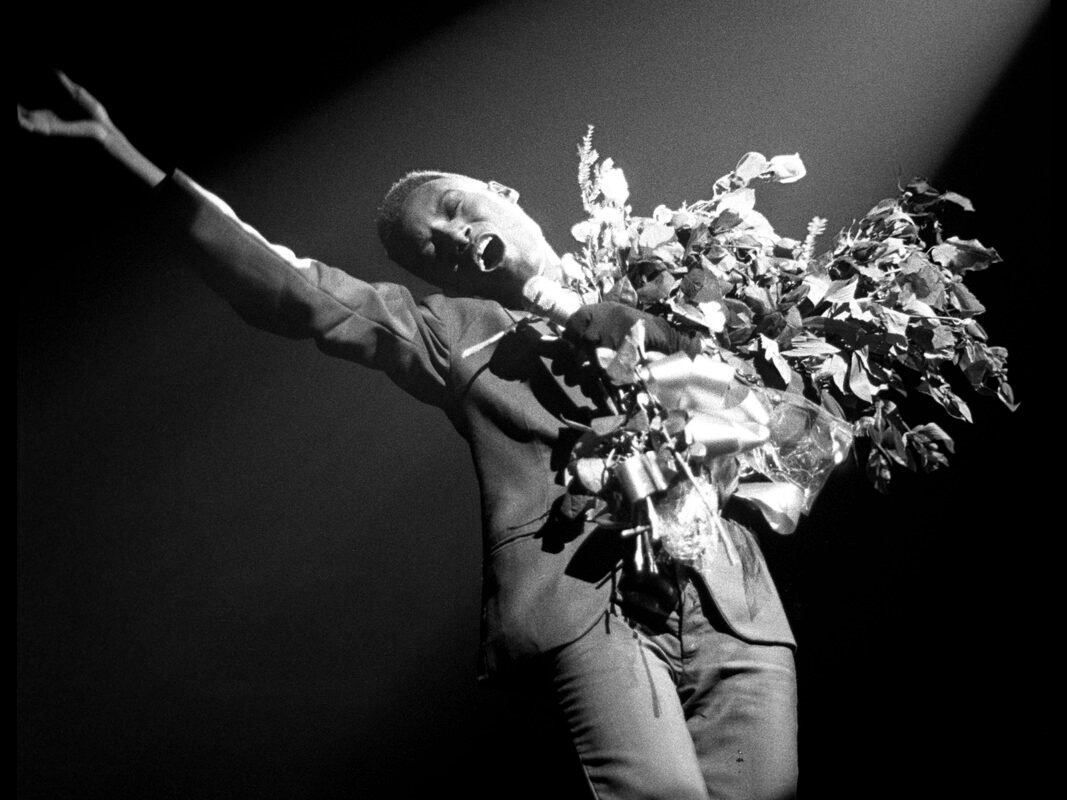
Denver’s DIVA exhibition brings together nearly 100 legendary performers and approximately 250 objects, including iconic stage costumes worn by Tina Turner, Cher, Rihanna, Dolly Parton, and other influential stars.
In 1977, Tina Turner was beginning a new chapter in her life and career after leaving her abusive marriage and musical partnership with Ike Turner. Determined to reinvent herself as a solo performer, she turned to legendary costume designer Bob Mackie to help create a striking new stage identity.
The result was the now-iconic “Flame Dress,” a sparkling minidress paired with a dramatic red-and-orange feathered cape. More than an unforgettable performance outfit, the ensemble became a powerful symbol of personal freedom, resilience, and reinvention.
That spirit of transformation lies at the heart of DIVA, a major fashion exhibition at the Denver Art Museum. Curator Jill D’Alessandro describes Turner’s dramatic look as representing a “phoenix rising from the ashes,” reflecting the freedom she discovered onstage and the role fashion played in expressing her identity.
Running from October 4, 2026, through January 31, 2027, the exhibition explores the influence of nearly 100 iconic performers through approximately 250 objects, including 58 costumes. Organized by London’s Victoria and Albert Museum, the exhibition is making its only U.S. stop in Denver.
Spanning opera, music, film, and live performance, DIVA examines how extraordinary women and other boundary-breaking artists used fashion, performance, and public influence to reshape entertainment and culture.

From left: Cher attends the Rock Music Awards at the Santa Monica Civic Auditorium on August 9, 1975; sketch of Bob Mackie look worn by Cher.
From left: Michael Ochs Archives/Getty Images; BobMackie
Reclaiming the Meaning of the Diva
The word “diva” originally referred to celebrated opera singers and carried associations of extraordinary talent and almost divine status. However, its meaning changed during Hollywood’s studio era, when powerful female performers began challenging the companies controlling their careers.
The label increasingly acquired a negative connotation, with demanding female stars portrayed as difficult or troublesome. According to D’Alessandro, the word was often used to undermine women who were simply seeking greater control over their creative work and professional lives.
DIVA explores this complicated history through two acts, showing how performers have used clothing and stage personas to challenge expectations and establish their own identities.
Among the featured pieces is Marilyn Monroe’s fringed black dress from Some Like It Hot. The exhibition also includes Rihanna’s striking papal-inspired Maison Margiela ensemble, designed by John Galliano and worn to the 2018 Met Gala.
Other influential performers represented include Grace Jones, Prince, Janelle Monáe, and Lil Nas X, whose fashion choices have challenged conventional ideas about gender, beauty, and performance.

Tina Turner onstage performing in the Bob Mackie “Flame Dress, ” 1978. Designed by costume and fashion designer Bob Mackie.Credit: Charles Knight/Shutterstock/Denver Art Museum
Celebrating a Wider Range of Icons
For its Denver presentation, D’Alessandro expanded the original exhibition with additional film footage, photographs, and memorabilia. The local edition also gives greater visibility to Latina performers whose contributions have helped shape entertainment history.
Among those highlighted are Peruvian soprano Yma Sumac, Mexican film star María Félix, Cuban singer Celia Cruz, and Mexican American singer Selena Quintanilla.
The Denver exhibition also offers a more substantial tribute to Dolly Parton. While the original Victoria and Albert Museum presentation featured only a doll representing the country music legend, the Denver edition includes two of her actual stage costumes, loaned from the Dolly Parton Archive.
Parton appears in a section titled “Run the World,” which explores how performers have combined artistic success with business leadership and philanthropy. She is featured alongside Taylor Swift, Beyoncé, Rihanna, and Barbra Streisand.
The section highlights the influence these women have built beyond the stage, demonstrating how their creative achievements have translated into wider cultural and commercial power.

Rihanna attends the Heavenly Bodies: Fashion & The Catholic Imagination Costume Institute Gala at The Metropolitan Museum of Art on May 7, 2018 in New York City. Kevin Tachman/Getty Images for Vogue
The Power of Fashion and Female Solidarity
While DIVA celebrates individual talent and extraordinary stage identities, it also explores the relationships and shared experiences that connect performers.
D’Alessandro points to the friendship between Cher and Tina Turner, whose personal experiences with controlling partners helped create a bond between them.
In 1975, the two performers appeared together on The Cher Show, performing “Shame, Shame, Shame.” Their connection offers an example of how artists can support and encourage one another while navigating demanding careers and personal challenges.
The exhibition concludes with a gallery devoted to Cher’s spectacular sequined costumes designed by Bob Mackie, bringing the story back to the designer whose work helped define some of entertainment’s most memorable fashion moments.
Ultimately, DIVA makes the case that a powerful stage identity is rarely created in isolation. Behind the glamour, dramatic costumes, and larger-than-life performances are stories of independence, creativity, resilience, and solidarity.
From Tina Turner’s fiery Flame Dress to Cher’s dazzling Mackie creations and the contemporary influence of Taylor Swift, the exhibition celebrates performers who have used fashion not simply to attract attention, but to define themselves and change the culture around them.
Exhibition details: DIVA is on view at the Denver Art Museum from October 4, 2026, through January 31, 2027. It features approximately 250 objects, including 58 costumes, and is the exhibition’s only U.S. presentation.