The Beverly Hills Hotel has introduced a three-hour chauffeured architecture tour celebrating the visionary designer whose work helped shape Los Angeles, from celebrity mansions to major civic landmarks.
Paul R. Williams was one of the most influential architects in Los Angeles history. Across a career spanning nearly six decades, the native Angeleno designed more than 3,000 projects, including private residences, hotels, churches, offices, and public housing. Now, a new guided tour in Beverly Hills and three museum exhibitions are giving visitors an opportunity to discover the full scope of his remarkable legacy.
Born in 1894, Williams broke barriers in the architectural profession, becoming the first Black architect licensed west of the Mississippi River. In 1923, he made history again as the first Black member of the American Institute of Architects.
His portfolio included prestigious private commissions as well as important community and civic buildings, among them the First African Methodist Episcopal Church and the headquarters of Golden State Mutual Life Insurance Company.
Williams became known as the architect to the stars, with clients such as Frank Sinatra, Lucille Ball, and Cary Grant. Yet, despite designing some of the most impressive homes in Los Angeles, racial covenants prevented him from living in the very neighborhoods where many of his clients resided.
His influence extended far beyond Hollywood. Williams dedicated considerable effort to public housing, designing Langston Terrace in Washington, D.C., and Hacienda Village and Pueblo del Rio in South Los Angeles, the latter two in collaboration with architect Richard Neutra. His other notable projects included the Los Angeles County Courthouse and the celebrated Theme Building at Los Angeles International Airport, which he helped design as part of an architectural team.

A landmark connection to The Beverly Hills Hotel
Among Williams’s most enduring contributions is The Beverly Hills Hotel. During the property’s expansion in the 1940s, he designed the Crescent Wing and introduced several features that would become synonymous with the hotel, including its grand entrance, the Polo Lounge restaurant, the Fountain Coffee Room, and the poolside cabanas.
The property also pays tribute to his legacy through the Paul R. Williams Suite, an opulent 1,445-square-foot accommodation considered one of the hotel’s most desirable rooms.
That historic relationship provides the inspiration for Building Dreams in Beverly Hills, a new architecture tour created for hotel guests. Led by Joshua G. Stein, a professor at Woodbury School of Architecture, the three-hour experience takes visitors through Beverly Hills in a chauffeured car, exploring Williams-designed residences alongside the city’s civic and commercial architecture.
Stein says the experience offers a striking look at the architect’s versatility and his ability to work across an extraordinary range of styles. Rather than focusing solely on the luxury shopping and celebrity culture associated with Beverly Hills, the itinerary examines how architecture helped shape the city’s identity.
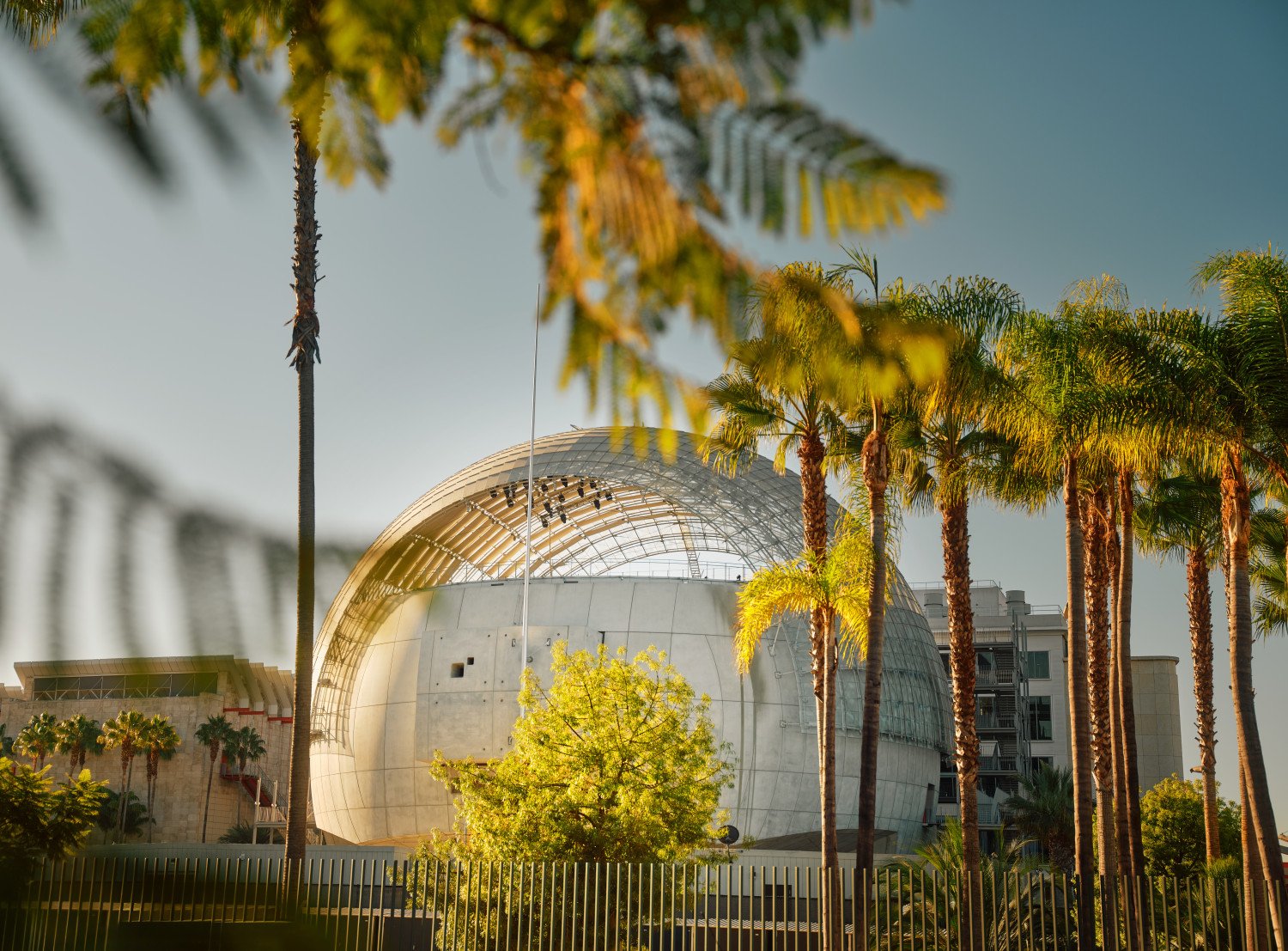
The tour also places Williams’s work in context with landmark buildings by Frank Lloyd Wright, Charles Moore, and Renzo Piano, highlighting the different architectural approaches that have influenced the development of greater Los Angeles.

Exterior facade of The Beverly Hills Hotel. Credit: Dorchester Collection
Los Angeles museums revisit Williams’s legacy.
The Beverly Hills experience is part of a broader citywide celebration of Williams’s career, with three exhibitions examining different aspects of his work.
The series began in August at the USC Fisher Museum of Art with Paul R. Williams: An Architect Considered, which focuses on 35 of his multifamily housing projects.
On November 15, the Los Angeles County Museum of Art (LACMA) will open Paul R. Williams: Architect for Living. The exhibition will explore the breadth of his work across residential, civic, commercial, religious, and hospitality architecture.
The Getty Research Institute will present the third exhibition, Paul R. Williams: Architecture Across the Color Line, beginning December 15. It will examine his work with Black communities during a period marked by segregation and racial exclusion.
All three exhibitions draw from the Paul R. Williams Archive, jointly acquired by Getty and the USC School of Architecture in 2020. The collection reveals the full reach of his architectural practice, extending well beyond the luxury homes and hotels that have defined much of his public reputation.
For Beverly Hills Hotel general manager John Scanlon, sharing Williams’s story with guests is an opportunity to help preserve and celebrate his contributions. The tour brings that history into focus through the streets and buildings of Beverly Hills, where his work remains an essential part of the city’s architectural landscape, even though his name is not as widely recognized as his designs.

Paul R. Williams seated at his Los Angeles office desk. Getty Research Institute
How to experience Building Dreams in Beverly Hills
The Building Dreams in Beverly Hills package includes an overnight stay in a junior suite for two guests, a three-hour guided architecture tour in a chauffeured car, and daily breakfast.
Rates begin at $3,145, based on double occupancy. The package is available through December 31, 2026.
For travelers interested in architecture, design, and Los Angeles history, the experience offers a distinctive way to explore Beverly Hills while discovering the legacy of an architect whose influence can be seen throughout the city.