Beyond the Terminal: How Zayed International Airport is Setting a New Standard for Luxury Travel
For decades, airports have been seen as a necessary but often stressful part of the travel experience. A place of transactions, long lines, and hurried movements. However, a new vision is taking hold, one where the airport itself becomes a destination. At the forefront of this transformation is Abu Dhabi’s Zayed International Airport, a landmark of modern infrastructure that is betting a billion dollars on the idea that passengers want to linger—and spend—in a space that feels more like a luxury resort than a transit hub.
A Grand Vision: From Transit Hub to Travel Destination
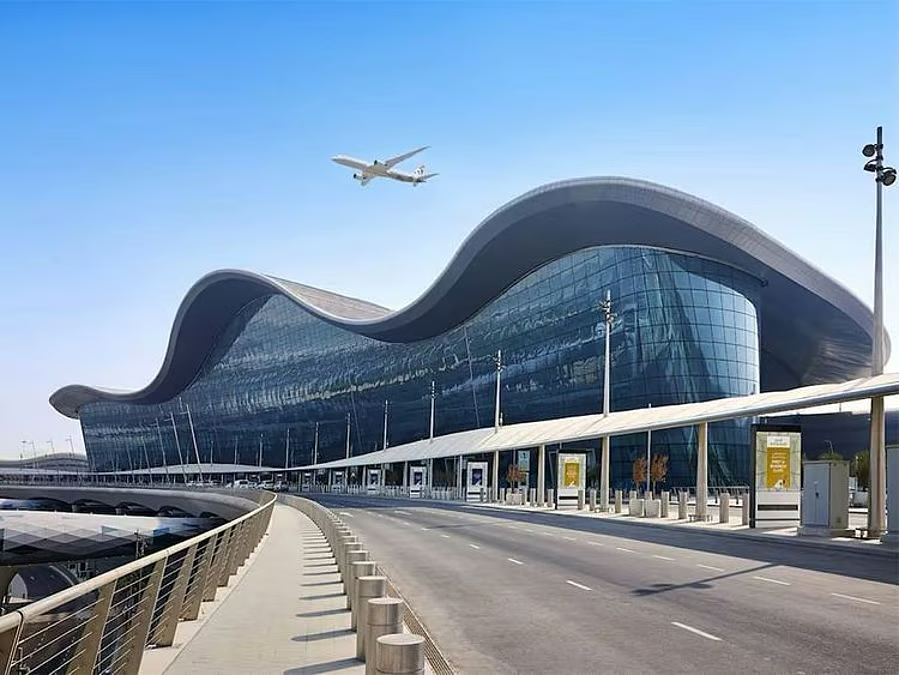
The architectural marvel of Zayed International Airport is immediately apparent. Soaring curved glass panels bathe the interior in natural light, creating an atmosphere of calm and sophistication. This isn’t by accident. The airport’s redesign, which opened just over a year ago, was a deliberate move to challenge the traditional airport model. The goal was to create an environment that reflects Abu Dhabi’s heritage of generosity and hospitality, a place where the journey begins the moment a traveler steps off the plane.
This hospitality-driven approach has paid off dramatically. The new terminal increased its retail footprint by an impressive 55 percent to 375,000 square feet, and the results have been nothing short of exceptional. Since the opening, the average traveler’s spending has more than doubled. This success is a testament to the airport’s understanding of the modern traveler and its commitment to offering a curated, high-end experience.
The airport is now home to a stunning array of 163 brands, including luxury boutiques like Hermès, Saint Laurent, and Gucci. It also features unique concepts like the world’s first airport Muji store and the award-winning sneaker boutique Presented By. This thoughtful mix of global luxury and unique offerings is a key part of its appeal. The strategy has been so effective that in the first quarter of 2025, Zayed International Airport achieved a net promoter score of 75, placing it among the highest-rated airports globally.
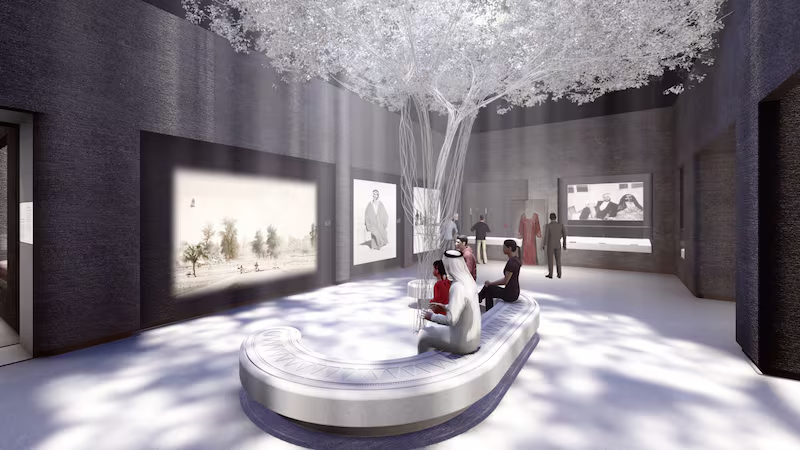
Zayed International Airport’s success is a direct reflection of Abu Dhabi’s broader ambition to establish itself as a global destination and cultural capital. The city is making massive investments in world-class attractions, from the future Zayed National Museum to the highly anticipated Disney World Abu Dhabi, announced in May. These new landmarks join existing cultural icons like the Louvre Abu Dhabi, all working in concert to draw in a new kind of traveler.

According to Elena Sorlini, managing director and CEO of Abu Dhabi Airports, this vision is central to the airport’s role. “We’re not just the gateway to Abu Dhabi,” Sorlini said. “We are the brand introduction. That means we must mirror the city’s sophistication from the moment someone steps off the plane.”
A unique metric highlights this success: while most Middle Eastern hubs see a majority of transit passengers, Zayed International Airport has a rare 50/50 split between transit and “point-to-point” passengers—those who are coming specifically to stay in Abu Dhabi. This high proportion of direct tourists creates ideal conditions for luxury retail, as visitors arrive “in holiday mode” and are ready to spend.
Beyond its striking design and luxury retail, the airport has invested heavily in technology to create a “seamless travel” experience. The ultimate goal, as Sorlini describes it, is to create a journey where passengers no longer need to use any physical documents. This has been made possible through the deployment of multi-touchpoint facial recognition technology, which allows for a curb-to-gate journey in as little as 12 minutes. This focus on efficiency proves that speed and comfort can coexist, enhancing the luxury experience rather than detracting from it. The airport also boasts the only U.S. Customs pre-clearance facility in the Middle East and Asia, a convenience that further streamlines the travel process for a key demographic of high-spending passengers.
The culinary offerings have also been carefully curated to elevate the travel experience. The airport’s dining portfolio includes a variety of premium concepts, such as Todd English’s first-ever airport restaurant, along with other high-end choices like Taste of India and Camden Food Co., as well as local artisanal cafés. This diverse selection ensures that every aspect of the passenger’s journey is a premium one.
A Look to the Future
The success of Zayed International Airport is built on a deep understanding of evolving consumer behavior. Elena Sorlini notes that the passenger profile is constantly changing, with the average age of travelers being “quite young.” To cater to this dynamic demographic, the airport leverages activations and pop-up experiences, which have been shown to drive a dramatic increase in spending.
Looking ahead, the airport is exploring new strategies to capture even more revenue, particularly from business-class passengers who typically spend their time in airline lounges. Concepts like personal shopping services and e-commerce integration are being explored to bring the luxury retail experience directly to these high-value guests.
Zayed International Airport represents a paradigm shift in the travel industry. It is a powerful example of how a strategic, hospitality-driven approach to infrastructure can transform a functional space into a luxury destination. It is a bold statement that the future of travel isn’t just about the destination, but also about the journey itself.