Aman Rosa Alpina makes a compelling case for a post-Olympics escape.
For nearly a century, Rosa Alpina has been a fixture in San Cassiano, a small village wrapped by the jagged peaks of Italy’s Dolomites. Long before luxury travel became a global industry, the hotel earned its reputation through the quiet, deeply personal hospitality of the Pizzinini family, who built their name on care that felt instinctive rather than scripted.
Guests still tell stories of Hugo Pizzinini, a third-generation custodian of the hotel, brewing restorative teas from Alpine wildflowers when someone fell ill recipes passed down from his grandmother. “Hospitality,” his wife Ursula often says, “is in our DNA.”
:max_bytes(150000):strip_icc():format(webp)/TAL-intro-aman-rosa-alpina-lounge-AMANROSAALPINA1225-39dded741d30482d87d6fa68e9a6b6e9.jpg)
That’s why the announcement in 2020 caught many by surprise. Rosa Alpina revealed it would partner with Aman, the ultra-luxury hotel group known for its restrained aesthetic and global footprint of 36 properties and for never having taken over an existing hotel. The news raised eyebrows. Could a family-run Alpine institution maintain its soul under a brand celebrated for minimalist serenity?
After an extensive, multi-year renovation, the hotel reopened in July 2025 as Aman Rosa Alpina, quickly becoming one of the most closely watched launches of the year.
:max_bytes(150000):strip_icc():format(webp)/TAL-what-we-like-il-salotto-AMANROSAALPINA1225-4d0deb7c61a74253bbc2e33ac443517d.jpg)
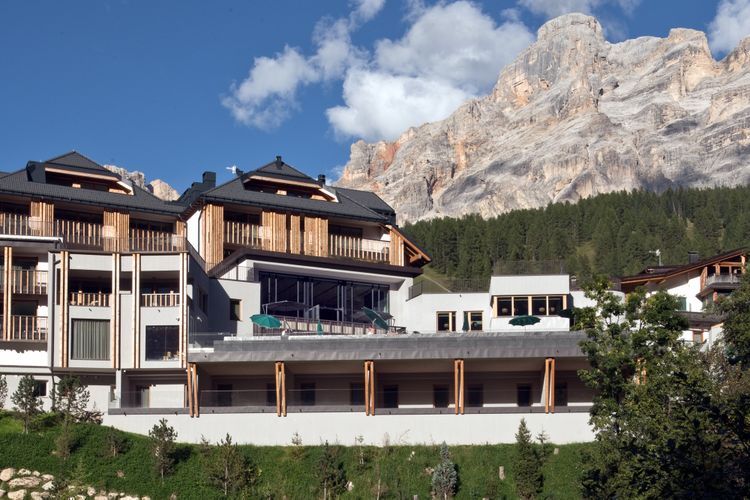
Late last autumn, I traveled to the newly reimagined resort with my two young daughters to see how the transformation had unfolded. I had last been there in 2017, and the changes were immediately evident. The traditional chalet exterior once defined by exposed beams and wooden balconies has been replaced by a refined timber lattice accented with dark metal detailing. The redesign, led by architect Jean-Michel Gathy, strikes a careful balance: modern and architectural, yet firmly grounded in the Alpine landscape.
Gathy has said his aim was to respect the Pizzinini family’s legacy while interpreting Aman’s philosophy understated elegance, spatial calm, and a strong sense of place through a contemporary lens.
That approach is felt most strongly inside. The former lobby, once cozy but slightly cavernous, has given way to an airy great room flooded with light from floor-to-ceiling windows. Clean lines dominate, softened by handwoven wool tapestries inspired by the Dolomites themselves. At the heart of the space sits Il Salotto, the lobby bar that quickly becomes the social core of the hotel.
:max_bytes(150000):strip_icc():format(webp)/TAL-rooms-01-suite-bedroom-AMANROSAALPINA1225-8b7b417b02e040a4a172e2b4fd2b6269.jpg)
Each morning, Hugo and his father Paolo impeccably dressed and quietly observant — can be found there over espresso, keeping a gentle watch on the comings and goings. In the evenings, my daughters and I played Uno by one of the fireplaces while Mauro Rinaldo, Rosa Alpina’s pianist of 25 years, filled the room with familiar melodies.
The following day, a group of longtime Rosa Alpina regulars joined the Pizzininis for a hike to lunch at Ütia Bioch, a mountain rifugio perched high above the valley. Known for its 12,000-bottle wine cellar, the hut offers sweeping views across the UNESCO-listed Dolomites, their peaks freshly dusted with snow.
Over plates of handmade mushroom ravioli, conversation naturally turned to the hotel’s evolution. Hugo described the Aman partnership as a rare alignment. “You have a family-run hotel combined with a world-renowned brand,” he said. “It brings together the best of both.”
The Spa
:max_bytes(150000):strip_icc():format(webp)/TAL-spa-indoor-pool-AMANROSAALPINA1225-50678bb790c343908ab6e4803be5fc2a.jpg)
He knows the property intimately he grew up in its corridors, just as his father did, and now raises his own three children there. Ursula added that the decision to evolve wasn’t about abandoning tradition, but ensuring the hotel could speak to a new generation of travelers. Most longtime guests, she noted, ultimately supported the direction once they understood the vision.
While there is inevitably some nostalgia for the old Rosa Alpina, it became clear that the hotel’s essence was never tied solely to its architecture. Its real character has always lived in the openness of the family the way they invite guests into their world rather than simply hosting them.
Now, with an Aman-appointed general manager overseeing daily operations, the Pizzininis are free to focus even more on that human connection. If anything, the partnership seems to have amplified what made Rosa Alpina special in the first place and suggests that its most compelling chapter may still be unfolding.