At the 2026 Canadian Whisky Awards, rye whisky took a leading role—highlighting how Canada’s long-established blended tradition now stands alongside a new wave of bold, craft-driven, cask-focused expressions.
Canadian Rye Whisky

Canadian rye whisky has historically been defined less by rigid mash-bill rules and more by its aromatic signature and flavor profile. For generations, top Canadian distillers have relied on blending as the primary tool for shaping rye character—combining a smooth, corn-forward base whisky for body and sweetness with smaller amounts of highly aromatic “flavoring” whiskies, often rich in rye, to introduce spice, herbs, and complexity. The result is a style that balances elegance and approachability while remaining unmistakably rye-driven.
The Canadian Whisky Awards (CWA) offer a revealing yearly snapshot of how this tradition continues to evolve. Established in 2010 by renowned whisky writer and historian Davin de Kergommeaux, the CWA is widely recognized as the first long-standing awards program dedicated exclusively to whisky distilled and aged in Canada.
Award recipients are selected through blind tastings conducted by a panel of judges and assessed based on aroma, flavor, balance, and overall complexity. The 2026 winners will be formally announced at a gala in Victoria, British Columbia, during the Victoria Whisky Festival on January 15, 2026. What follows are background notes and tasting impressions for four rye and rye-forward whiskies that stood out this year.
Understanding Canadian Rye’s Signature Style
Canadian rye whisky is traditionally defined by a distinctive flavor profile achieved through blending. Many producers distill individual components from different grains separately. A high-proof, corn-dominant base whisky provides sweetness and mouthfeel, while lower-proof flavoring whiskies—often rye-heavy, sometimes incorporating wheat or barley—add aromatics and spice. These elements are then carefully blended to achieve balance.
Compared to many American straight ryes, Canadian rye is typically lighter in body, with a clean, refined texture. The focus is on rye’s aromatic qualities, showcasing herbal and spicy notes such as mint, wintergreen, cracked pepper, clove, and baking spices, supported by dry grain character, vanilla, caramel, and well-integrated oak.
Today, Canadian rye increasingly falls into two distinct stylistic categories. The classic blended style emphasizes smoothness, subtle spice integration, restrained oak influence, and a structure well-suited to cocktails or easy sipping. The newer craft-driven approach highlights rye-forward mash bills—sometimes 100% rye—often distilled at lower proof to preserve congeners, bottled at higher strength, and occasionally finished in wine or fortified-wine casks.
These modern expressions tend to be fuller-bodied and more assertive, delivering flavors of rye bread, earthy grain, pepper, baking spices, and firmer tannins, while still retaining the herbal and minty notes long associated with Canadian rye.
Canadian Rye Whisky of the Year

45.9% ABV | 750 ml
King of the North earned the title of Canadian Rye Whisky of the Year and comes from Wild Life Distillery’s limited-release special cask program.
Wild Life’s house style centers on locally sourced, rye-forward mash bills, double pot distillation, and bold oak maturation. Despite the assertive wood influence, the whisky maintains a vibrant aromatic profile marked by mint, baking spices, and deeply caramelized sugars. On the palate, it is rich and concentrated, offering rye spice, toffee, charred oak, and dry cocoa. The finish is long, warming, and spicy, with lingering black pepper, herbal mint, and firm oak tannins.
Mixed Mash Whisky of the Year
Wild Life Distillery, Wild Life Rye Whisky

45.9% ABV | 750 ml
Produced in Canmore, Alberta, this rye-forward whisky is milled, mashed, fermented, distilled, and aged entirely on site using a 500-liter Alembic copper pot still. The published mash bill is 88% rye and 12% malted barley.
The nose presents a classic Western Canadian rye profile, with mint, wintergreen, cracked pepper, rye bread, vanilla, toffee, and seasoned oak. On the palate, it is full-flavored and structured, delivering black pepper, cinnamon, honey, and cooked cereal notes. The malted barley contributes a subtle softness, adding creaminess without diminishing the spice. The finish is medium-long and drying, with clove, mint, vanilla, and oak lingering pleasantly.
Best Cask Strength Whisky & Best Whisky Aged 8 Years or Under
Sons of Vancouver Distillery, “The First Crack of a Crème Brûlée” Wheated Rye
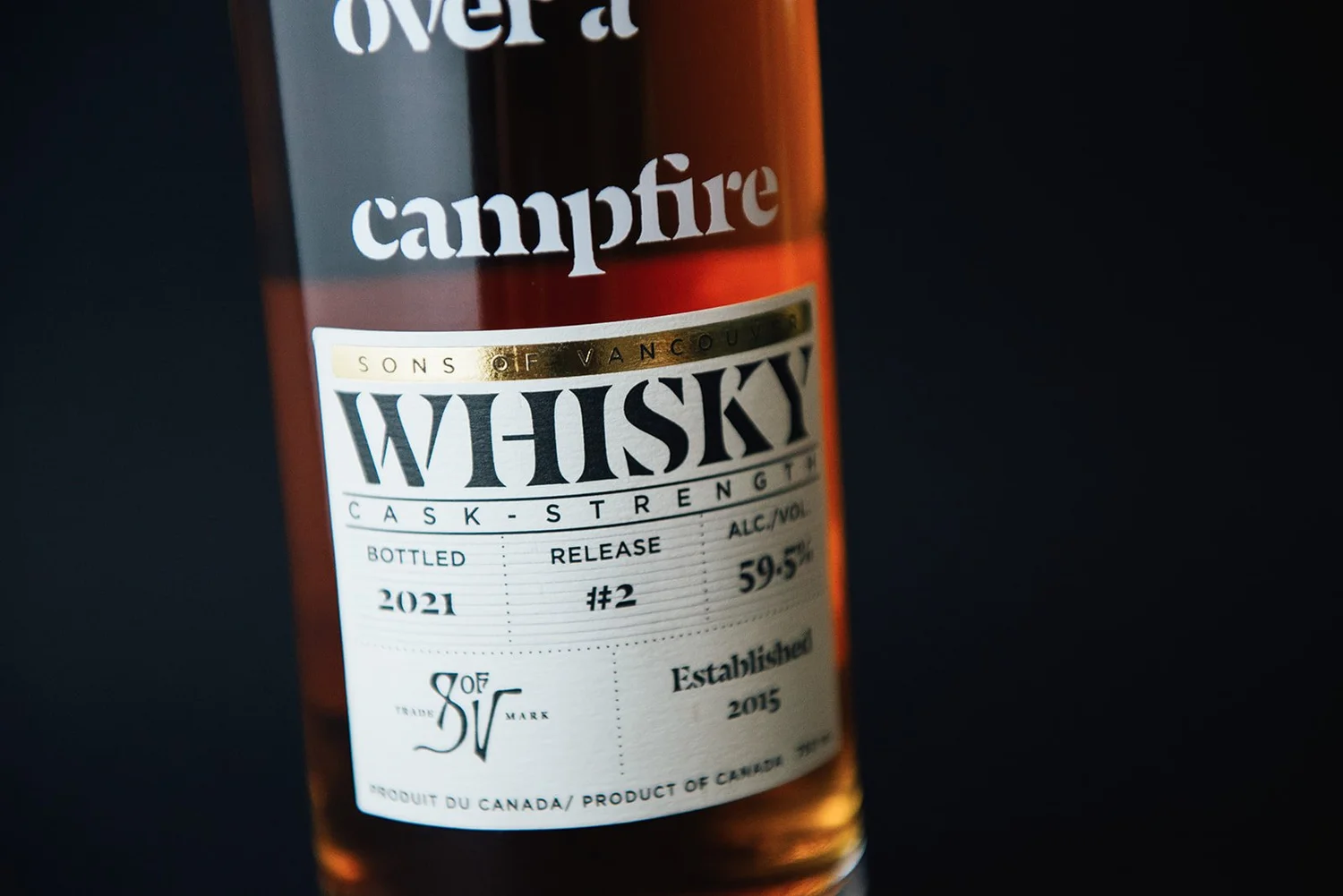
57.9% ABV | 750 ml
Sons of Vancouver, a small-batch craft distillery in North Vancouver, British Columbia, is known for experimental releases and meticulous production. This wheated rye features a mash bill of 72% rye and 28% wheat and is matured in a combination of new oak and ex-bourbon barrels.
As the name suggests, the aroma evokes toasted sugar, vanilla custard, and browned butter, layered with rye’s minty spice and noticeable cask-strength intensity. The palate is smooth, silky, and sweet, with flavors of custard, caramel, and vanilla from the wheat component. Rye contributes pepper, anise, and spearmint, while new oak adds caramelized wood sugars and firm tannins. Ex-bourbon casks round out the profile with vanilla and baking spice. The finish is long and warming, with charred oak, caramel, cinnamon, and a cooling mint note.
Best New Whisky
Sons of Vancouver Distillery, Wheated Rye

50.5% ABV | 750 ml
This expression is built on a mash bill of 75% rye and 25% wheat and matured in a mix of ex-bourbon barrels and new American oak—a combination that emphasizes vanilla and caramel while keeping rye’s herbal spice front and center.
The nose offers vanilla, honey, cooked grain, caramel, rye bread, mint, and baking spices. On the palate, the whisky is robust yet smooth, delivering rye bread, black pepper, baking spices, and herbal mint. The wheat adds a creamy texture and pronounced mouthfeel. The finish is medium-long, gently sweet, and slightly drying, with lingering vanilla, rye spice, seasoned oak, and faint cocoa and toasted grain notes.
The Bigger Story Behind the 2026 Results
These award winners highlight what has become the defining narrative in Canadian rye whisky: the category is no longer confined to a single stylistic identity. The traditional Canadian approach—blending for balance, clarity, and drinkability—remains highly effective and continues to offer one of the most refined expressions of rye’s herbal-spice character.
At the same time, distilleries such as Wild Life and Sons of Vancouver demonstrate that Canadian rye can also excel in a more powerful, assertive style. Rye-forward mash bills, lower distillation proofs, higher bottling strengths, and intentional wood management are being used not to soften whisky, but to give it structure and presence.
In short, Canadian rye has become a broader, more inclusive category. It now encompasses everything from smooth, cocktail-friendly blends to cask-strength, detail-driven releases that favor intensity over restraint. The 2026 Canadian Whisky Awards do not champion one path over the other—they affirm both—making it clear that Canadian rye’s identity is expanding, not being replaced.