Jonathan Anderson looked to an unexpected source of inspiration for his Dior Spring/Summer 2027 women’s collection: the Chinese tradition of hand-rolling wénwán walnuts.
Presented on September 29 at Le Bassin Octogonal in Paris’s Jardin des Tuileries, the collection featured 65 looks on a set created by Bureau Betak. Anderson used the walnut as a metaphor for time, knowledge and the way heritage evolves.
According to Dior’s show notes, wénwán walnuts are traditionally rolled by hand, with their distinctive patina developing gradually through years of handling. For Anderson, that transformation offered a way to think about the value hidden within nature and the accumulation of knowledge over time.
“Coming across wénwán walnuts reminded me,” Anderson said, “of how we can find knowledge and preciousness in nature.”
Dior presented the collection notes as a calligram shaped like a walnut, printed in both English and French.
At the center of the concept was the idea that the knowledge contained within a seed exists long before a tree grows and spreads its branches. For Anderson, the metaphor extended naturally to fashion: the archive is the seed from which new ideas can develop.
Rather than reproducing historical Dior pieces literally, the collection reinterpreted elements of the house archive through contemporary proportions, materials and construction.
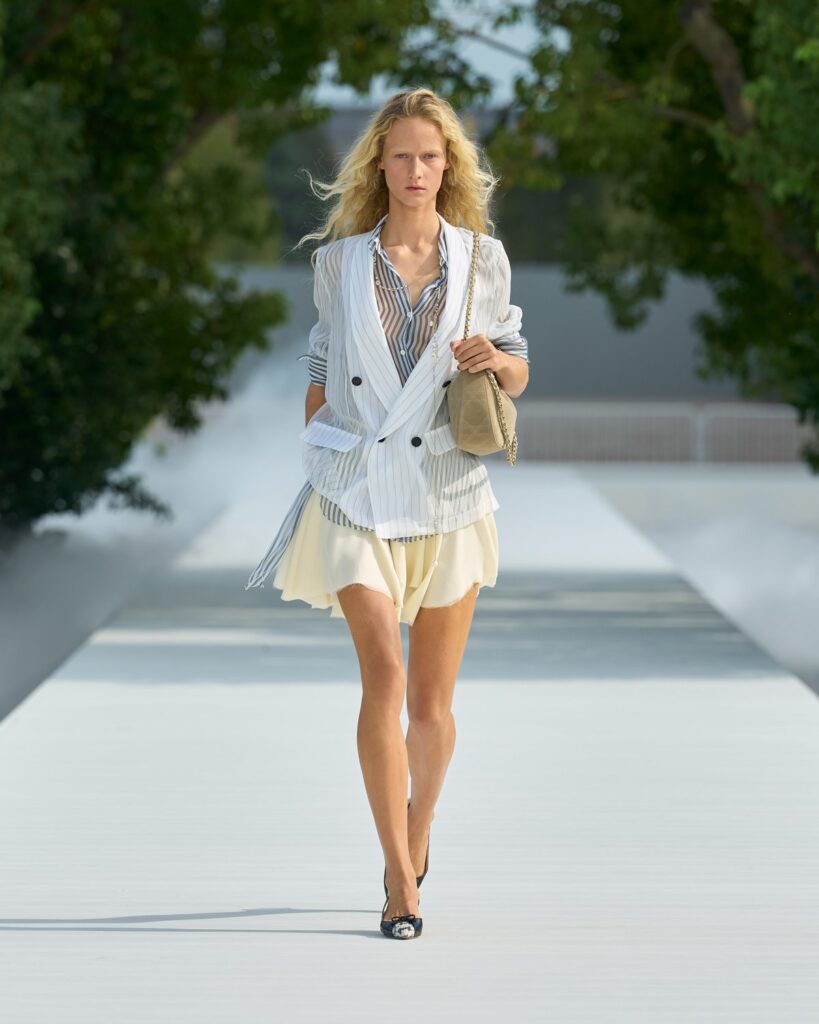
The collection was also built around a series of questions. Anderson explored what might happen if the traditionally structured tailleur were treated with the softness of flou, how weightless a garment could become and whether lace could appear almost capable of holding air.
Those contrasts were evident throughout the runway.
Structured jackets were frequently worn open, creating a sharp frame around skirts and garments that appeared almost weightless. Transparency gradually shifted toward opacity, while delicate materials introduced a sense of movement and lightness against more defined tailoring.
The result was a collection less concerned with immediate spectacle than with transformation—taking established Dior codes and allowing them to evolve slowly, much like the changing surface of a wénwán walnut over time.
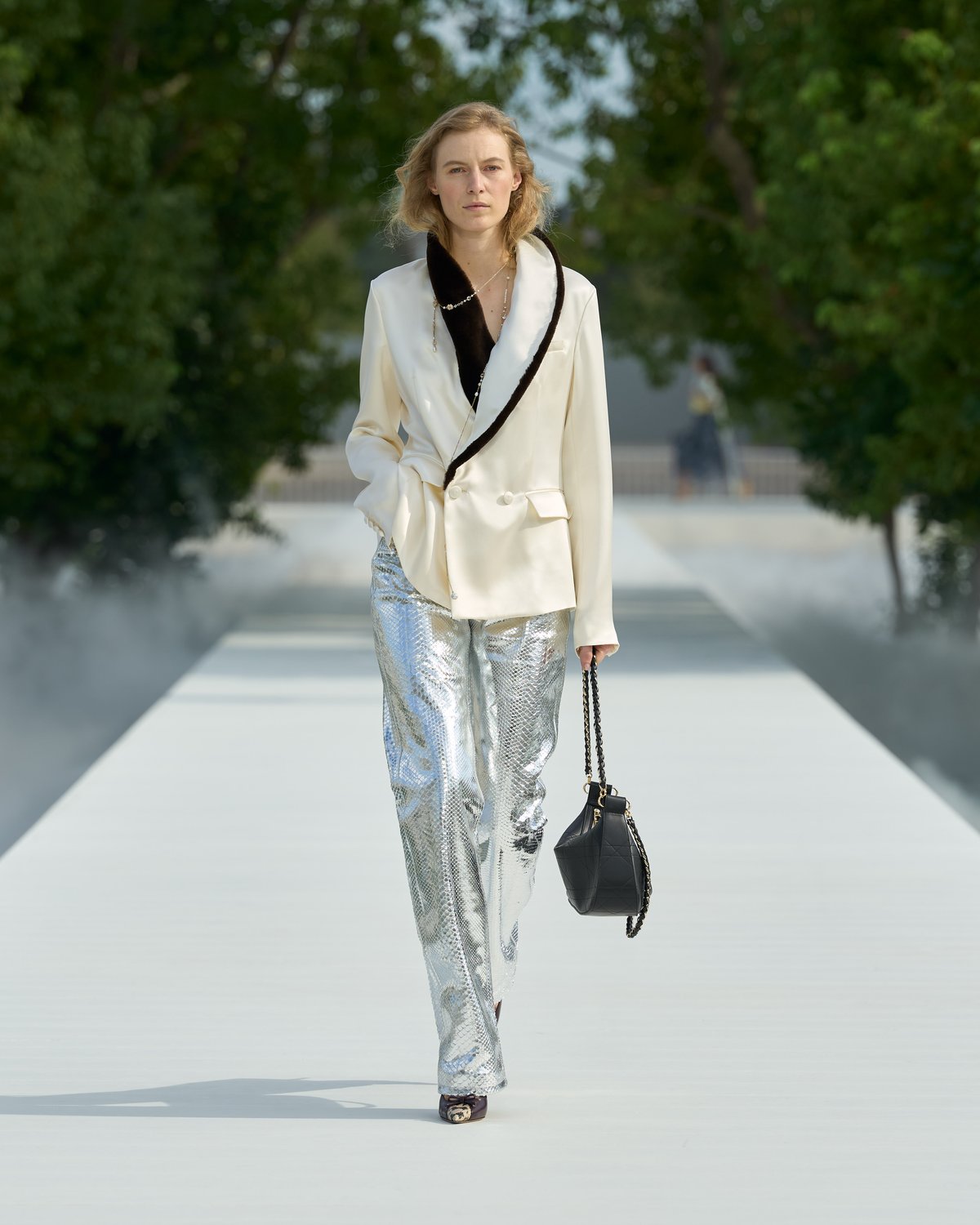
Photo Credit: Courtesy of Dior
The fabric list follows the same brief. Dior names inlaid Chantilly lace, double duchess satin, silk mousseline, organza, bouclé and printed jacquard plissé. The imagery is botanical, too: trumpet flowers, a petal that unfurls, a tendril that curls and watercolor in the rain. Accordingly, many looks pair soft florals with crisp, menswear-leaning jackets.
Symmetry is the other thread. “What looks symmetrical in nature,” said Anderson, “is often not quite.” That idea, in turn, explains the uneven hems and loosely draped scarves across the lineup. The notes return to it more than once, asking where true symmetry lies and setting symmetry against asymmetry. Still, nothing here feels deliberately awkward.
The setting carried the same message. Bureau Betak produced the show, and the house will replant the trees from the set in the Jardin des Tuileries. There, they will continue to grow in the years to come. For a collection about seeds and growth, that is a fitting afterlife, and a rare runway set that outlasts the show.
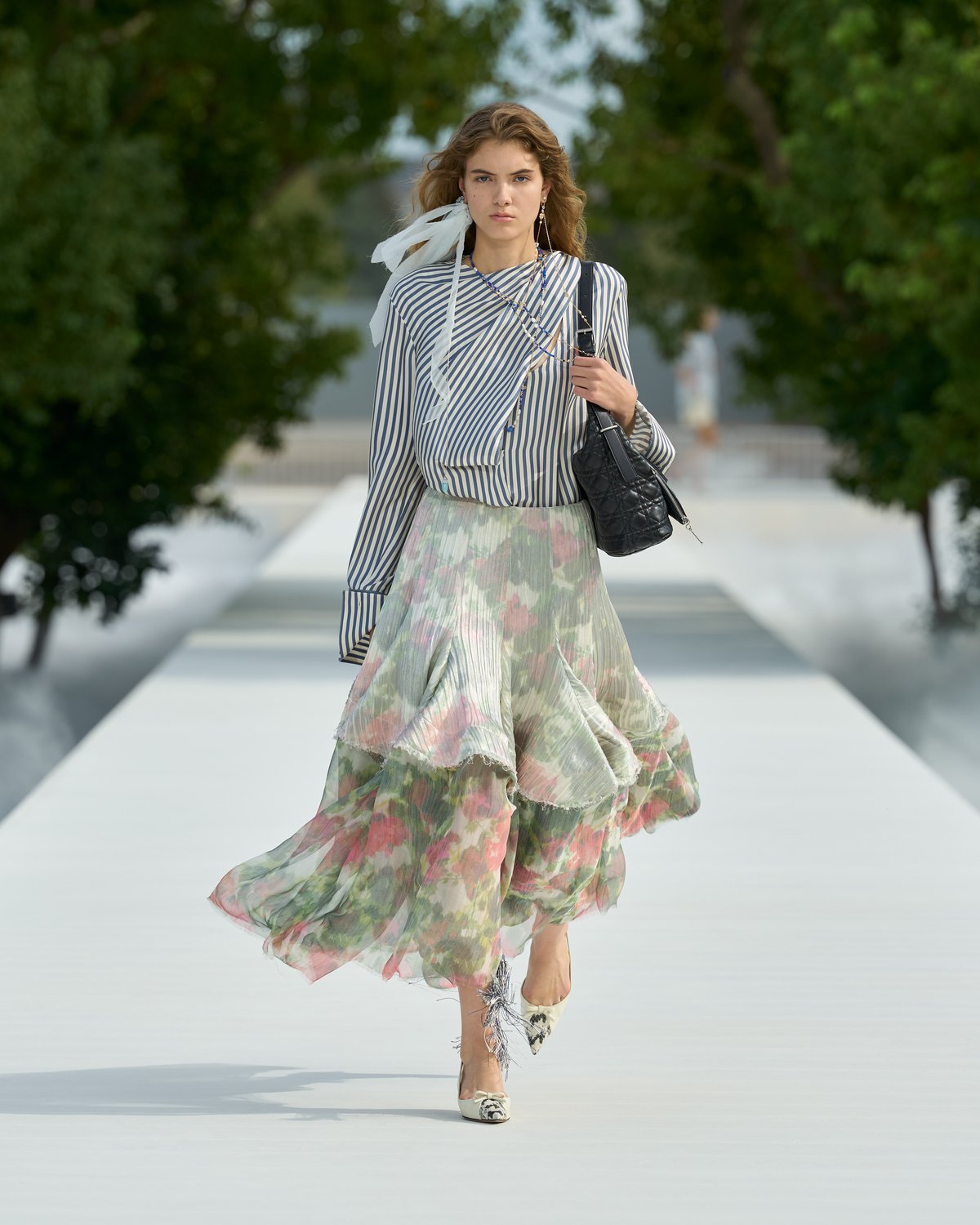
Photo Credit: Courtesy of Dior
Anderson worked with a familiar team. Benjamin Bruno styled the show, Guido Palau did the hair and Peter Philips did the makeup. Ashley Brokaw handled casting, and Ama Quashie did the manicures. Damien Quintard took on the music, MJ Harper led movement and Holmes Production coordinated. Finally, the collection carries a dedication to Mathilde.