With new H08 models, innovative materials and a growing in-house manufacturing operation, Hermès is building its reputation as a serious watchmaker without sacrificing its playful design identity.
Hermès is taking a patient approach to establishing itself among the leading names in luxury watchmaking. Rather than relying solely on its reputation in fashion and leather goods, the French house is investing in technical expertise, distinctive designs and unconventional complications to carve out its own place in the industry.
Its latest move is the introduction of two new versions of the sporty H08 collection, reinforcing a strategy built around creativity, engineering and a willingness to approach traditional watchmaking differently.
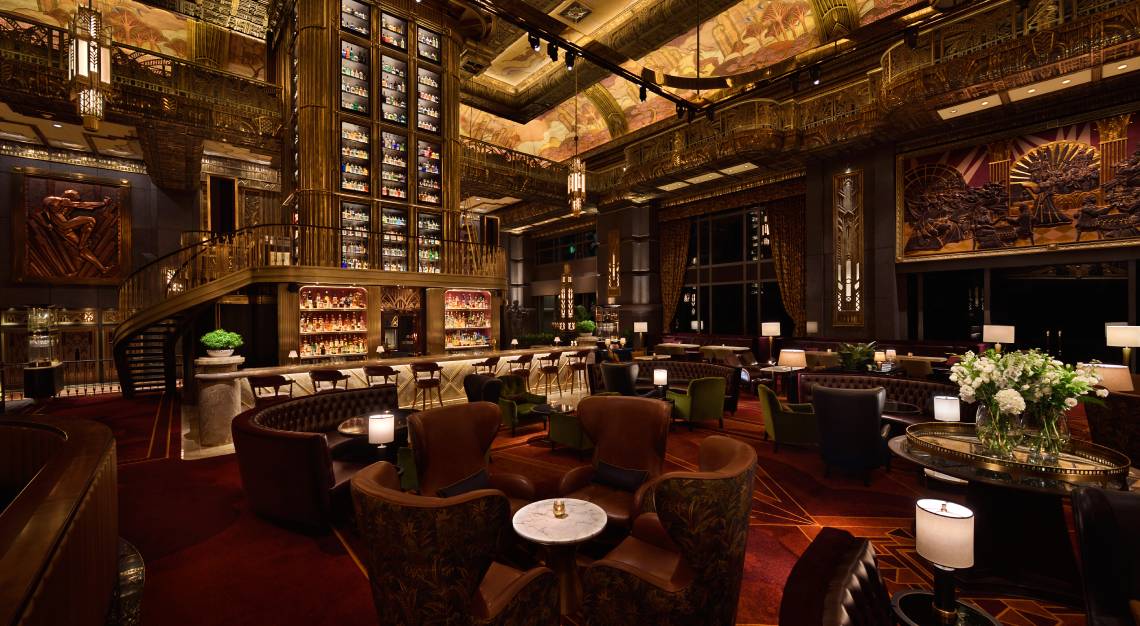
At a dinner on the rooftop of its Miami Design District boutique, the question of Hermès’s standing among watch enthusiasts came into focus when a prospective buyer considered purchasing the $21,600 H08 Skeleton. Beyond its appearance, the buyer wanted to know whether the brand had developed a following among collectors—and whether the watch could retain its value.
For Laurent Dordet, chief executive of Hermès Horloger, building that kind of credibility takes time.
Building Watchmaking Credibility Over Decades
Hermès established its watch business in 1978, with an ambition to match established competitors technically while maintaining a distinct creative identity. The company’s approach has emphasized expressive colors, unusual materials and playful designs rather than simply following conventional luxury-watch codes.
A major turning point came in 2006, when Hermès acquired a stake in Swiss movement manufacturer Vaucher. The company subsequently expanded its capabilities through additional acquisitions related to watch cases and dials.
Developing its first movement after the Vaucher acquisition took six years, Dordet explained. That investment laid the groundwork for greater control over production and opened the door to technical features that would previously have been more difficult to achieve.
Hermès now employs approximately 600 people across three Swiss manufacturing facilities, covering movement production, case and dial manufacturing, assembly, development and production.
The company’s first in-house movement arrived in 2012, marking an important milestone in its evolution from a design-led watch business toward a more technically integrated manufacturer.

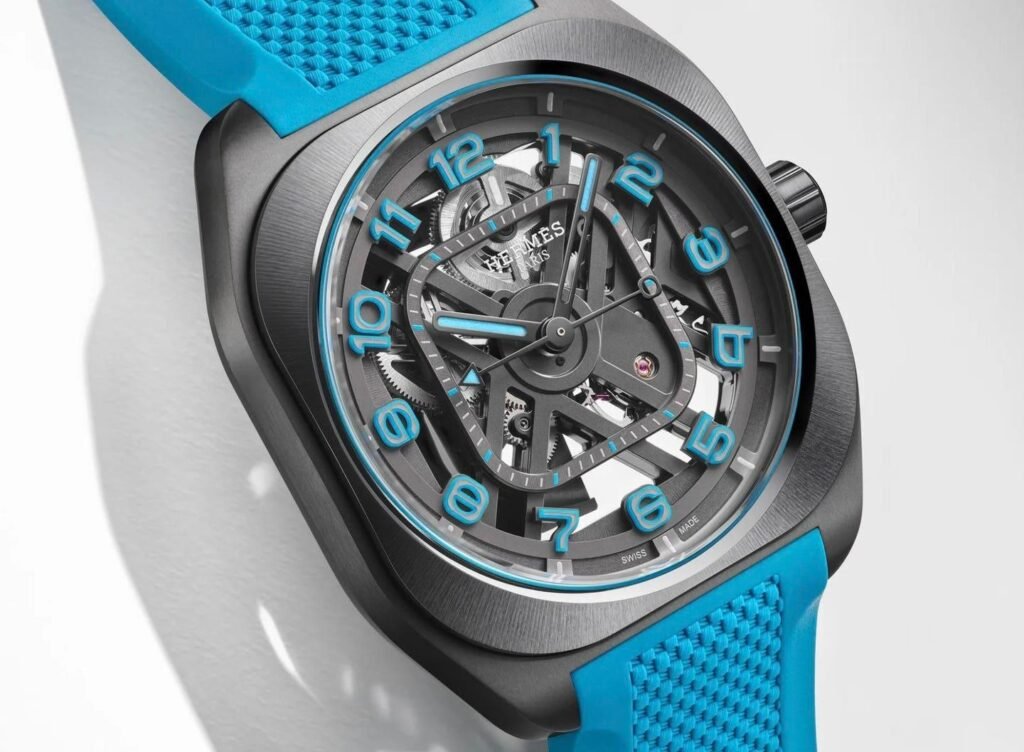
The H08 in a striking blue.Hermès
The H08: Sporty Design With a Distinctive Identity
Introduced in 2021, the H08 has become one of Hermès’s key men’s watch collections. Its defining feature is a cushion-shaped case that combines rounded and squared forms, giving it a modern, urban character distinct from more traditional sports watches.
The latest versions continue that design language through an inventive combination of materials and finishes. The case uses fiberglass with an aluminum-coated, marbled surface, while the ceramic bezel is available in satin-brushed white or bleu de Malte, with mirror-polished chamfers.
A white lacquered dial features applied Arabic numerals treated with ruthenium, while the watch is powered by the self-winding Hermès H1837 movement, produced in-house.
For creative director Philippe Delhotal, the collection’s challenge is to evolve without losing its identity. Lightness and robustness remain central to the design, particularly for a sports watch that must balance practical durability with visual refinement.
The H08 Skeleton follows that philosophy, revealing elements of the movement while retaining a relatively restrained appearance.
Serious Watchmaking With a Sense of Play
Hermès has long differentiated itself through watches that combine sophisticated craftsmanship with unconventional visual storytelling.
Geoff Hess, Sotheby’s global head of watches and senior vice president in New York, highlighted that balance during the Miami event. He pointed to the brand’s ability to pair complicated watchmaking with whimsical elements, including intricate decorative work and animated displays.
One example of the company’s unconventional approach is the Arceau Le Temps suspendu, or “Time Suspended,” which won the men’s watch category at the Grand Prix d’Horlogerie de Genève in 2011.
The concept challenged traditional ideas about timekeeping by allowing the wearer to suspend the display of time and later return to the current time. Its unusual complication represented a significant moment for Hermès, demonstrating that the brand could explore technical innovation through a distinctly imaginative lens.
For Hermès, watches are not merely instruments for measuring time. They can also be objects designed to create delight and encourage a more playful relationship with horology.

A glimpse at the caseback.Hermès
A Long-Term Strategy for Collectors
Despite its growing technical capabilities, Hermès acknowledges that it still has work to do to gain recognition among dedicated watch enthusiasts.
Dordet believes that explaining the brand’s manufacturing expertise and giving customers time to understand its approach can gradually change perceptions. The strategy is not built around an overnight transformation, but on introducing meaningful innovations year after year.
The H08 provides a platform for that development, allowing Hermès to experiment with materials, refine its design language and demonstrate the benefits of its increasingly integrated production process.
Whether a particular model will retain its value is a separate question, and the article offers no guarantee of future resale performance. But Hermès’s broader ambition is clear: to establish a lasting reputation in watchmaking through technical progress and a creative identity that remains unmistakably its own.
For a brand that prizes patience, craftsmanship and individuality, the long game may be the point.