In Norway’s remote Lofoten Islands, a four-day culinary gathering brings acclaimed chefs, wild ingredients, and dramatic coastal landscapes together for an unforgettable food experience.
In Norway’s far north, where jagged mountains rise above the Norwegian Sea and fishing villages cling to rocky shores, food offers a remarkable way to understand the landscape. In the Lofoten Islands, a destination known for its rugged hiking trails and Arctic scenery, a growing culinary movement is encouraging visitors to explore the region through its ingredients, traditions, and local communities.
At the center of this experience is Kitchen on the Edge of the World, an intimate four-day culinary event hosted at Holmen Lofoten, a distinctive hotel in the village of Sørvågen. The gathering brings celebrated chefs into the property’s kitchen to create meals inspired by the surrounding environment, while inviting guests to discover the people and producers who sustain the region’s food culture.
A Coastal Retreat With a Deep Sense of Place
Once home to a cod-processing factory, Holmen Lofoten has been transformed into a hotel and culinary destination built around traditional Norwegian fishing cabins, known as rorbuer. The mustard-colored buildings stand on stilts above the water, connected by wooden walkways and decks that open onto the rugged coastline.
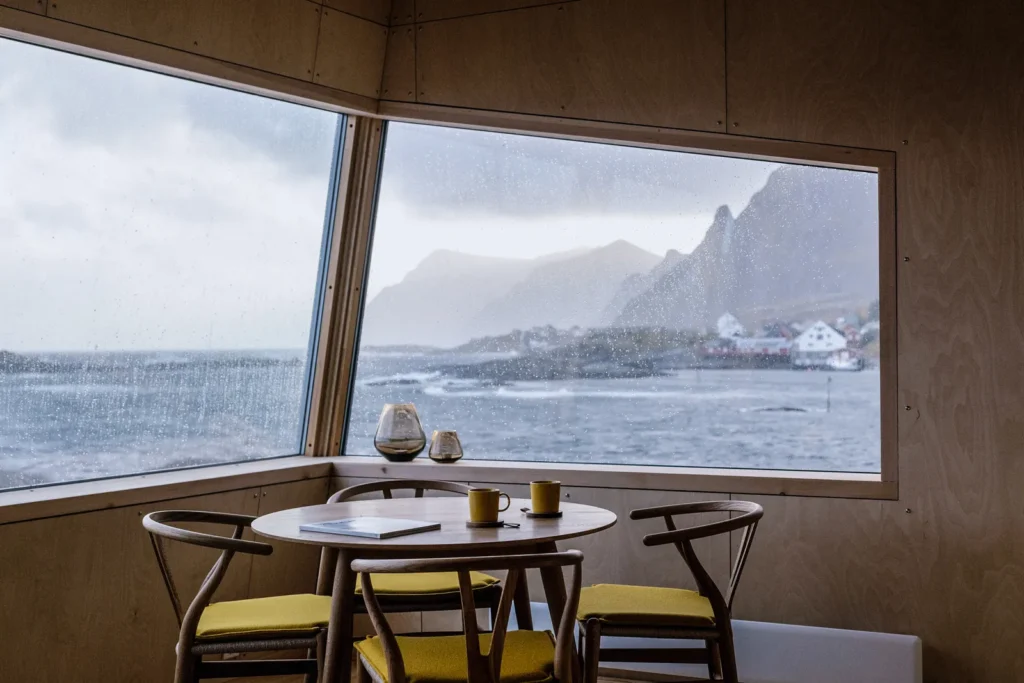
The property’s interiors favor natural materials, understated furnishings, and large windows that frame the sea. Its restoration has preserved much of the original character, creating a setting where the landscape remains central to the experience.
The hotel’s story is closely tied to Ingunn Rasmussen, who took over the property in 2001 and now runs it with her son, Håvar Holmen. Her vision was to create a place where guests could step away from everyday distractions and reconnect with nature.
That philosophy informs the culinary program, which has welcomed acclaimed chefs since its launch in 2018. For its 30th edition, the event featured Matt Orlando, the California-born, Copenhagen-based chef known for his work in influential kitchens and his commitment to more responsible food systems.
Cooking With the Arctic Elements
At Holmen, the kitchen is not a closed-off performance space. Guests can stop by to watch the chefs work, ask questions, and follow the creative process from ingredient to finished dish.
Orlando arrived with a selection of familiar ingredients, including barley, yellow peas, and miso, but was particularly interested in what he could find locally. A foraging trip with the chef yielded chickweed, corn shoots, and sheep sorrel—ingredients that helped shape the menu around the immediate environment.
Local sourcing extends to reindeer from a sustainable farm run by Sámi herders, regional cheeses, Lofotlam lamb, and seasonal vegetables. Even the tableware reflects the islands’ identity: ceramic pieces by local artist Gunvor Tangrand draw inspiration from the surrounding landscape and incorporate textures reminiscent of old fishing yarn.
The resulting meals combine culinary experimentation with a strong sense of place. One standout creation was a set of fishbone noodles made by pressure-cooking fish bones and blending them into a smooth mixture. The collagen-rich base gave the noodles their distinctive texture, complemented by smoked chili, sunflower-seed miso, and fermented chili cream.
Other dishes included fermented potato bread with allium butter, grilled mushrooms with chili-strawberry barbecue sauce, and seafood prepared to highlight the character of the region’s waters.

Sustainability Beyond the Plate
For Orlando, cooking in a remote destination offers an opportunity to work creatively with unfamiliar ingredients while considering how food is produced and used. His approach aligns with Holmen’s emphasis on reducing waste, supporting local producers, and making the region’s resources central to the dining experience.
That commitment is especially important in Lofoten, where the sea and climate have shaped livelihoods for generations. The Gulf Stream’s interaction with cold Arctic waters supports marine life, while long summer daylight encourages plant growth and sea spray enriches grazing land.
The islands’ relationship with food is perhaps most visible in their centuries-old cod industry. Each winter, Arctic cod known as skrei migrate from the Barents Sea to the waters around Lofoten to spawn. The fish are traditionally hung on wooden drying racks called hjeller, where they become tørrfisk, or wind-dried stockfish.
This seasonal tradition remains an important part of the region’s identity, although changing migration patterns and the pressures of offshore fishing have challenged coastal communities over the years.
Today, local producers are exploring additional ways to make a living from the surrounding ecosystem.
Seaweed, Small Farms, and a New Food Economy
In the fishing village of Napp, the Lofoten Seaweed Company is helping diversify the region’s food economy. Co-founded by Angelita Eriksen and Tamara Singer, the women-led business hand-harvests seven varieties of local seaweed, including sugar kelp and nori.
The seaweed is processed into seasonings and other products for kitchens and consumers, with the company also producing toiletries. Its ingredients have reached acclaimed restaurants, including Noma and Geranium in Copenhagen.
Elsewhere across the islands, cheesemakers and small-scale farmers are cultivating regional specialties and developing stronger links with restaurants. Love Food, an organization focused on food and agricultural systems, works to connect local producers with hospitality businesses.
The principle is straightforward: conservation is more likely to succeed when communities can earn a sustainable living from their land and waters. Choosing local lamb, stockfish, seaweed, and cheese helps support the producers who maintain those traditions.
Visitors can explore this food culture at farms and specialist shops throughout the archipelago. Lofoten Gardsysteri, an organic and biodynamic dairy farm, offers locally produced cheeses and other farm-shop goods. Aalan Gård is known for goat’s-milk cheeses, its herb garden, and farm experiences that must be arranged in advance.

Tourism With Greater Purpose
Lofoten’s extraordinary scenery has helped make it one of Northern Norway’s most popular destinations. But the increase in visitors has also raised questions about how tourism can grow without damaging the environment or disrupting local life.
Mountain guides have become increasingly concerned about inexperienced hikers attempting difficult routes after seeing them on social media. Weather can change rapidly, and trails that appear inviting in photographs may become dangerous in rain, fog, and strong winds. Wild camping has also been restricted to designated areas.
For Holmen and its collaborators, food tourism offers another way to experience the islands. Rather than focusing exclusively on climbing and sightseeing, visitors can meet producers, learn about traditional food practices, and gain a deeper understanding of the landscape.
The approach also gives travelers a chance to contribute directly to the local economy while learning why protecting the environment matters to the people who live there.
Beyond the Dining Table
The experience at Holmen extends well beyond formal meals. Guests can join foraging walks, explore the shoreline by inflatable boat, and take part in creative workshops inspired by the natural environment.
During one excursion, visitors traveled to an uninhabited island that had once supported a fishing community. After motorboats made it easier for fishermen to reach spawning grounds without living nearby, the settlement was abandoned. Nature has since reclaimed the island, where waterfalls, reindeer moss, and coastal vegetation now dominate the landscape.
Other activities have included gathering moss, mushrooms, and berry-laden branches for botanical table arrangements, as well as carving wooden spoons from local birch.
These experiences reflect a quieter form of luxury—one built around time, craftsmanship, connection, and an appreciation of what the land provides.
Extending the Journey to Henningsvær
Travelers looking to explore more of the archipelago can continue north to Henningsvær, a picturesque fishing village roughly two hours from Holmen. Its winding waterways, colorful boats, independent shops, and contemporary art spaces offer a different perspective on island life.
Trevarefabrikken, a boutique hotel and cultural hub housed in a former cod-liver-oil factory, is a notable place to stay. Visitors can walk to the village’s famous football field, browse galleries in repurposed industrial buildings, enjoy fish soup at Klatrekafeen, or unwind in a seafront sauna.
For those interested in the region’s wider food culture, a detour to Kvitnes Gard in nearby Vesterålen offers another example of regenerative agriculture and destination dining. The historic estate operates as a farm hotel and restaurant focused on making thoughtful use of local resources.
Planning a Visit
Kitchen on the Edge of the World runs four-night events around the equinoxes and solstices, and places can book up quickly. The announced 2027 lineup includes Toni Toivanen of Copenhagen restaurant Barr and Irish chef and photojournalist James Gabriel Martin. Chef Halvar Ellingsen of Kvitnes Gard is also scheduled to join the event from September 30 to November 4, 2027.
Travelers interested in exploring the region’s food systems can visit Lofoten Seaweed Company’s shops in Napp and Henningsvær, sample regional products, and arrange visits to local farms.
The weather may not always deliver postcard-perfect views. In Lofoten, fog, rain, and sunshine can arrive in quick succession, and the landscape often reveals itself in fragments rather than sweeping panoramas.
Yet that unpredictability is part of the islands’ character. Through meals shaped by local ingredients, conversations with producers, and excursions into the surrounding wilderness, visitors can discover a destination where food and landscape are inseparable—and where the most memorable experiences may come from slowing down enough to appreciate both.