A transition is taking place in high-end horology, with solar-powered luxury watches leaving their specialist status and entering the mainstream. Solar movements, once thought to be only for digital and low-cost clocks, are now being adopted by prestige companies looking for low-maintenance, sustainable, and technically attractive alternatives to standard battery or mechanical systems.
In 2025, the attention has shifted to a few noteworthy debuts — Tiffany’s Rope, Tissot’s PRC 100 Solar, and new solar variants from TAG Heuer, Seiko, and others — signalling what many in the watch community believe is a watershed moment.
Date
Quartz, 41 mm, Steel
$ 1.850,00
The Evolution of Sola
Solar-powered watches made their debut in the late 1970s and early 1980s, with Japanese companies leading the way. Early models were big, utilitarian, and frequently sold as tough or technological novelties rather than works of fine craftsmanship. Solar was once thought to be incompatible with the Swiss luxury mechanical tradition.
Tim Barber, co-host of The Watch Enquiry, once referred to solar watches as “the ultimate example of moving away from mechanical watchmaking.” That perception is quickly vanishing.
In recent years, advances in photovoltaic technology, micro-engineering, and materials science have allowed solar cells to shrink, become more efficient, and be integrated discreetly. Today’s solar movements can charge from natural or artificial light, hide beneath elegant dials, and offer extended power reserves — making them far more attractive to luxury brands.
Tiffany Co.: Solar Elegance Meets High Jewellery
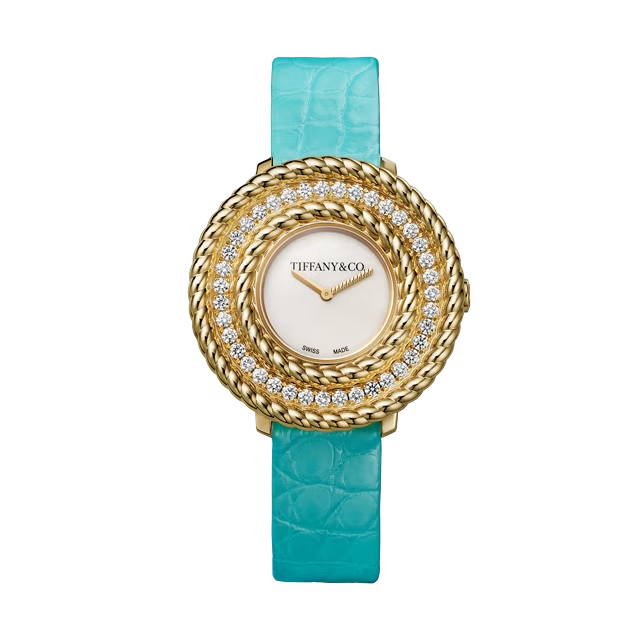
One of 2025’s most talked-about launches is Tiffany & Co.’s Rope solar-powered watch, a milestone as the brand’s first solar-powered jewellery timepiece.
Design & Aesthetic
$ 1.850,00
Inspired by the iconic twisted rope motif of Jean Schlumberger, the Rope watch is a marriage of Tiffany’s jewelry heritage and innovative watchmaking. The bezel features double concentric rope rings, separated by a circle of brilliant diamonds. Depending on the model, the dial is rendered in glossy black lacquer or semi-translucent mother-of-pearl.
A clever design decision: the solar cells are placed beneath a semi-transparent dial, allowing light to pass through with minimal optical compromise. Just two minutes of sunlight can power the watch for 24 hours, while a full charge yields up to eight months of autonomy, even when kept in darkness.
Movement & Practicality
The Rope’s movement was co-developed with Swiss firm La Joux-Perret. It is designed for minimal maintenance: no battery changes every few years, and service intervals extended significantly.
Two sizes are available — 27 mm (with 38 diamonds) and 33 mm (39 diamonds) — allowing collectors to choose based on taste and wrist size.
Tiffany’s Rope watch demonstrates that solar technology can be elegant, discreet, and harmonious with luxury aesthetics. It marks a deliberate shift in how high-end houses view energy sourcing in horology.
Tissot PRC 100 Solar: Solar Moves Downmarket with Style
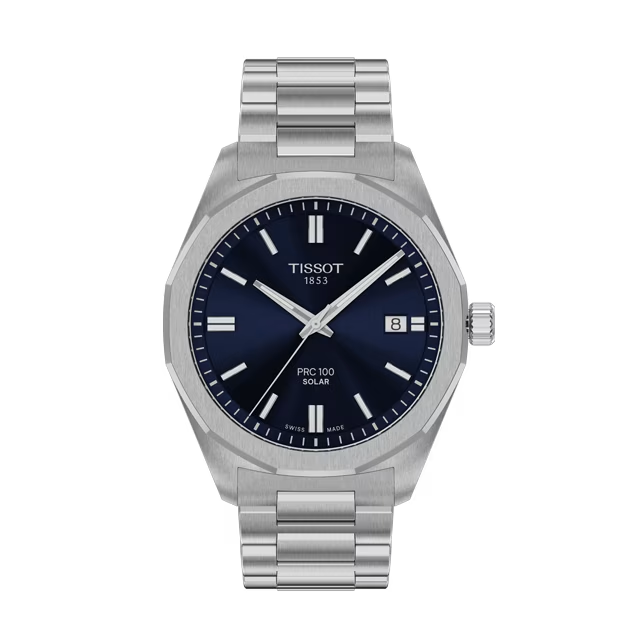
While Tiffany’s Rope makes waves in the jewelry sector, Tissot is pushing solar into more accessible realms of Swiss watchmaking. The PRC 100 Solar 39mm is powered by Tissot’s Lightmaster photovoltaic system and positioned to appeal to both enthusiasts and everyday wearers.
Technical Innovation: Lightmaster
Unlike solar watches that place cells under the dial, Tissot integrates microscopic honeycomb-structured solar cells within the sapphire crystal itself. This design opens up greater flexibility in dial materials — mother-of-pearl, brass, or lacquer — without compromising charging efficiency.
This setup allows the PRC 100 Solar to charge not just from sunlight but also from artificial indoor light. Ten minutes of light exposure deliver roughly 24 hours of operation, and a full charge provides up to 14 months of reserve.
Case, Design & Usability
The PRC 100 Solar maintains a well-balanced specification set:
- 39 mm stainless steel case (with optional black PVD versions)
- Scratch-resistant sapphire crystal
- Water resistance: 100 meters (10 bar)
- Date display at 3 o’clock
- Interchangeable quick-release straps allow personalisation
- End of Energy (EOE) indicator: The second hand begins to tick in four-second intervals when power is low, signalling the need for recharge.
$ 2.100,00
Hands-on reviews note that the honeycomb cell pattern is subtle and mostly invisible under normal wear, preserving the clean aesthetic of the dial.
Designers also revived the PRC 100 line — a classic from the 2000s — updating it with modern solar tech without losing its original character.
Market Position & Appeal
The PRC 100 Solar offers a compelling value proposition. It brings genuine Swiss luxury credentials together with solar convenience, all packaged in a well-finished, robust form factor. Reviewers highlight that its specifications make it versatile enough for both casual and dress wear. In a market saturated with mechanical hype, this model gives buyers an alternative: less maintenance, strong performance, and modern engineering, without sacrificing brand heritage.
Other Brands Embrace Solar: TAG Heuer, Seiko, and Beyond
Solar is no longer isolated to niche or fashion brands. Several established watchmakers are accelerating their solar roadmaps.
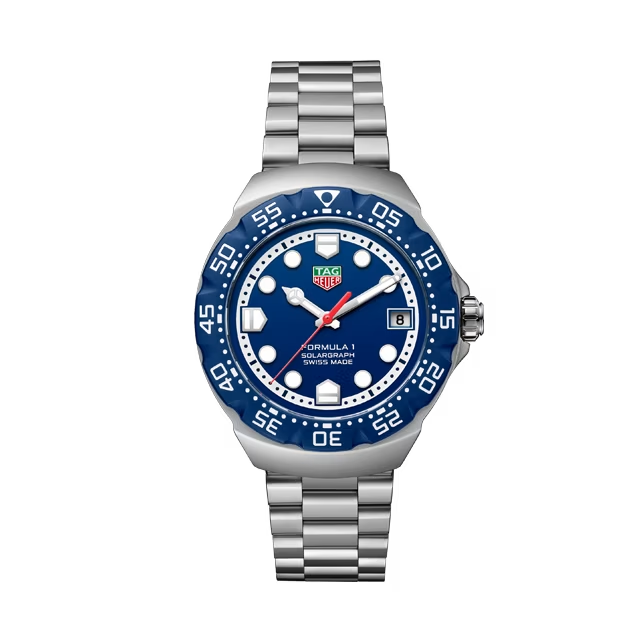
TAG Heuer Formula 1 Solargraph
TAG Heuer introduced a solar-powered variant of its Formula 1 line, dubbed the Solargraph. It features a slim 38 mm profile, bold colors, and a 10-month power reserve.
The Solargraph also comes with a five-year warranty, and TAG Heuer claims that servicing won’t be required for at least a decade — positioning solar as a long-term, durable alternative to quartz.
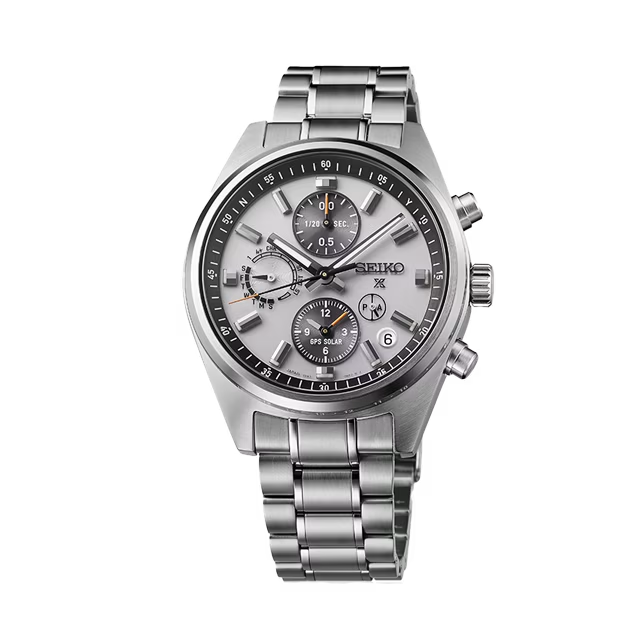
Seiko Prospex GPS Solar & Solar Divers
Japan’s Seiko continues to refine its solar offerings. Recent models include:
- Prospex GPS Solar Chronograph Speedtimer: features a six-month reserve.
- Prospex Solar Diver: touts a 10-month power reserve and strong water resistance.
These models build upon Seiko’s long solar legacy, combining technical performance with the trust of a respected brand.
Why Solar Is Now Aligning with Luxury
Several shifts are fueling the solar adoption wave among luxury watchmakers:
1. Maintenance-Free Appeal
Traditional quartz watches require battery changes every 2–3 years; mechanical watches demand regular servicing. Solar, with rechargeable accumulators and light-based recharging, dramatically reduces upkeep. Tiffany’s Rope, for example, does not need servicing for ten years.
2. Material & Design Freedom
By placing solar cells discretely (in sapphire crystals or behind translucent dials), designers can experiment with diverse textures, colors, and luxury materials (mother-of-pearl, metals, unique finishes). The result? Solar watches that look and feel as refined as mechanical ones.
3. Environmental and Longevity Messaging
In an era of sustainability, solar embodies renewable energy. For high-end buyers who care about legacy and value, a watch that keeps running with light holds more appeal than one needing disposable batteries.
4. Technological Crossover
Integrating solar in luxury watches isn’t just about swapping a movement — it requires mastery of optics, micro-engineering, and materials science. Brands investing in solar development are signaling that they can compete at the frontier of horological innovation.
Potential Challenges & Considerations
No technology is without hurdles. Some challenges that luxury solar watches must address:
- Light sensitivity: In low-light environments (especially indoors), charge retention and backup power must be robust.
- Durability of solar cells: Long-term degradation must be minimized.
- Aesthetic integration: Ensuring that solar cell patterns or textures remain invisible or decorative under normal wear.
- Perception among traditionalists: Some collectors still view mechanical movements as the pinnacle, so solar must prove itself on performance and emotion.
Brands are already working around these concerns. Tissot’s EOE indicator helps reduce battery drain. Tiffany’s semi-translucent dials seek to blend function with sophistication. With time and adoption, these trade-offs may become negligible for many buyers.
The Outlook: Is Solar the Future of Luxury Watches?
Solar technology is evolving from a futuristic experiment to a realistic, attractive solution for premium horology. As more firms adopt, refine, and market solar-powered watches, the technology will become the “new normal” rather than a specialty.
Tim Barber’s initial skepticism is giving way to excitement: the flexibility in design, lower upkeep, and environmental messaging make solar a viable option. According to one industry assessment, “Solar is not the future; it’s right now.”
Collectors and enthusiasts should be aware of numerous trends:
Hybrid solar-mechanical movements
Conclusion
The revival of solar in luxury timepieces is a watershed event in modern horology. Tiffany’s Rope combines jewelry and sustainable innovation, while Tissot’s PRC 100 Solar democratizes solar Swiss workmanship. TAG Heuer and Seiko add sporting and performance credentials to the trend.
Solar watches no longer have to choose between functionality and aesthetics. With the proper engineering and design integration, they may provide both effortless lifespan and sophisticated aesthetics.
The sun is rising on a new era of timepieces, one in which light not only illuminates time but also powers it.