Whether you’re reuniting with family for a villa holiday in the South of France, squeezing in one last multigenerational escape before summer ends, or discovering that a game of mah-jongg among siblings can become unexpectedly competitive, August has a way of bringing relatives together—and with them, all the love, history, and dysfunction of family life. These five novels explore the ties that continue to shape us long after we leave home.
Valeria Luisellie, Beginning Middle End
Beginning Middle End follows a recently divorced writer who arrives in Sicily with her 12-year-old daughter, hoping to rebuild their lives in the shadow of her mother’s dementia. Staying near the archaeological site where her grandmother once worked, the pair set out to return a small mosaic tile that has been passed down through their family—a journey that soon becomes a search for the stories and myths of those who came before them. As mother and daughter navigate volcanic landscapes, ancient ruins, and the shifting terrain of adolescence and grief, the novel traces four generations of women while asking what it means to begin again.
What makes Beginning Middle End so transporting is the way Luiselli turns Sicily itself into part of the family story. Its villages, coastlines, and archaeological sites seem to hold the memories the women are struggling to recover and understand. The mother and daughter are compelling companions, too; their conversations carry as much weight as the novel’s larger questions about motherhood, grief, and inheritance. More contemplative than plot-driven, the novel rewards readers who settle into its slower pace.

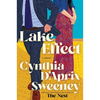
Cynthia D’Aprix Sweeney, Lake Effect
Bestselling author Cynthia D’Aprix Sweeney returns with Lake Effect, a sweeping family drama that begins in 1977 and unfolds over several decades. The novel follows two neighboring Rochester families whose lives are forever altered when Nina Larkin and Finn Finnegan have an affair, leave their spouses, and eventually marry. The fallout shapes both households for years, affecting parents and children alike. When Nina’s daughter, Clara, returns home for a family wedding, long-buried resentments and unresolved questions force both families to confront the choices that have defined them.
Sweeney is especially good at showing how a single decision can acquire different meanings depending on who remembers it. As the perspective shifts among parents, children, spouses, and siblings, she resists turning anyone into a villain, making even her most flawed characters surprisingly sympathetic. The pleasure lies in watching certainty slowly give way to compassion as the original scandal becomes part of a larger story about loyalty, regret, and forgiveness.
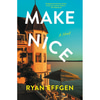
Ryan Effgen, Make Nice
A family getaway quickly unravels in Ryan Effgen’s Make Nice, a sharply observed novel about sibling rivalry, old resentments, and the impossibility of escaping your family. Months after their mother’s death, the adult Pickford siblings reunite with their father at the Grand Hotel on Michigan’s Mackinac Island for a long weekend. Each arrives with a crisis: Viv is reeling after learning that her husband is gay; Pete, a nationally recognized gastropod expert, is obsessed with finding a rare snail; and Corey, the family’s black sheep, is convinced he can turn his life around by selling a stash of cocaine to one of the hotel’s wealthy guests. As familiar family roles reassert themselves and old wounds reopen, the carefully orchestrated reunion becomes a comedy of bad decisions with real consequences.
Effgen never lets the family’s genuine pain overwhelm the fun. Sharp dialogue, spectacularly bad decisions, and the forced proximity of a long weekend keep the story moving, while the elegant lakeside setting makes every awkward meal and sibling skirmish even funnier. Beneath the comedy is an astute understanding of how quickly adults revert to their childhood selves around family. The Pickford siblings remain sympathetic even at their worst.
Shannon Sanders, The Great Wherever
Shannon Sanders’s The Great Wherever has been appearing on this summer’s most-anticipated book lists, and it earns the attention. The expansive family saga blends multigenerational storytelling with magical realism. The story centers on 32-year-old Aubrey Lamb, who is grieving her father’s death and sinking into debt. After inheriting her father’s stake in the family’s Tennessee farm, Aubrey returns home, where the ghosts of her ancestors observe her arrival. Their sharp wit and competing perspectives reveal the tangled history of both the family and the land. As Aubrey uncovers old betrayals and family secrets, she is forced to decide not only what she has inherited but what kind of future she is willing to build.
The novel’s greatest pleasure is its chorus of opinionated ancestors, who refuse to let Aubrey—or one another—settle on a single, tidy version of the family’s past. Their humor, contradictions, and unsolicited advice give the book its buoyancy, even as Aubrey grapples with grief and difficult questions about the land. Sanders uses magical realism with a light touch, allowing the ghosts to make the family’s history feel immediate without overwhelming Aubrey’s story. The ancestors steal nearly every scene, supplying comic relief without softening the book’s harder truths.

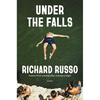
Richard Russo, Under the Falls
Richard Russo returns to the kind of small upstate New York town he has long explored in Under the Falls, a literary thriller that blends family drama and suspense. Eighteen years after leaving Stone Mountain, Tyler Sinclair, now the frontman of a famous band, comes home to perform at a benefit concert for Doc, a childhood friend who was paralyzed in an accident. Expecting only a brief visit, Tyler instead finds himself confronting his abusive father, the lifelong friends he abandoned, and Freddi, his former lover and the wife of his childhood best friend. When a deadly crash sets the town on edge, old loyalties and hidden betrayals surface, forcing Tyler to confront the choices that sent him away and decide whether reconciliation is still possible.
Tyler’s reluctant homecoming gives every revelation emotional weight. Russo never sacrifices warmth, humor, or moral complexity, even as his characters behave badly. The investigation into the deadly crash adds momentum to Russo’s small-town storytelling, making Under the Falls work as both a mystery and a family drama.