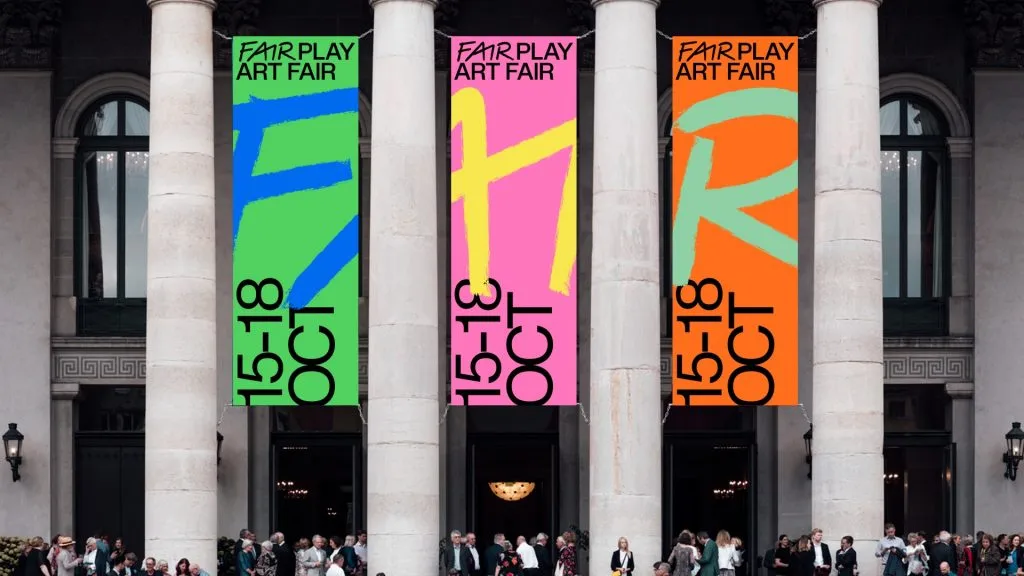
As Europe prepares for a busy autumn art season, London is showing renewed strength in the international art market, even as Paris continues to attract major collectors and record-breaking sales. With Frieze London running from October 14 to 18, followed by Art Basel Paris from October 21 to 25, galleries and advisers are weighing the opportunities in both cities amid rising costs and cautious spending.
For years, Paris has increasingly challenged London’s position as a leading European art destination. The arrival of Art Basel Paris has strengthened that shift, drawing international collectors with major museum exhibitions and high-profile gallery presentations. Yet London’s established gallery network, vibrant contemporary art scene and substantial auction market continue to make it an important stop on the global art calendar.
Dealer Thaddaeus Ropac, who questioned the health of London’s market after mixed auction results in 2022 and 2023, now sees reasons for renewed optimism. His gallery has extended its London lease for another decade, while Hauser & Wirth is developing a new 15,000-square-foot gallery on South Audley Street in Mayfair.
The investment suggests that major galleries continue to see long-term potential in the British capital, even as they expand their presence in Paris.

Hauser & Wirth’s Frieze London booth will include Frank Bowling’s Watermelon Bight (2020).Photo Eva Herzog/©2026 Frank Bowling, All rights reserved, DACS, London 2026/Courtesy of the Frank Bowling Foundation
London Attracts Artists, While Paris Draws International Collectors
Although Paris has gained ground as a destination for high-value art sales, London retains a strong appeal for artists and galleries presenting contemporary work.
Zoe Sperling, a partner at Hauser & Wirth London, said many of the gallery’s artists and estates are based in the United Kingdom, while international artists also want to exhibit in the city. The gallery plans to participate in both Frieze London and Art Basel Paris.
Ropac similarly views London as a city where artists can develop new work. He believes it has taken over some of the creative role once associated with Berlin, whose appeal has diminished somewhat in recent years.
At Frieze London, his gallery will present works by Denzil Forrester, Jordan Casteel, Oliver Beer, Mandy El-Sayegh and Antony Gormley. The emphasis will be on contemporary work reflecting developments in artists’ studios and the emerging art scene.
Paris, by contrast, will feature more established historical works from artists including Marcel Duchamp, Lucio Fontana, Roy Lichtenstein and Andy Warhol.
For many galleries, the two fairs serve complementary purposes rather than competing directly.
Kenta Murakami, a partner at New York’s Ortuzar gallery, described London and Paris as an extended art fair split between two cities. The gallery plans to show historical work at Frieze Masters, which runs alongside Frieze London, and focus on contemporary artists at Art Basel Paris.
At Frieze Masters, Ortuzar will present works spanning the 1940s through the 1990s by artists such as Josef Albers, Claire Falkenstein, Robert Ryman, Lynda Benglis, Joan Snyder, Suzanne Jackson, Jay DeFeo and Agnes Martin. Its Paris presentation will pair work by living artists, including Takako Yamaguchi, Claudette Johnson, Suzanne Jackson and Matt Connors, with historical pieces by Yoko Ono, Miyoko Ito and André Cadere.
The strategy allows the gallery to present different aspects of its program while assessing sales across both events.
Paris Leads in High-Value Art Sales
Despite London’s continued relevance, Paris has become an increasingly powerful destination for galleries seeking to sell expensive works.
Art adviser Meredith Darrow argued that the comparison between the two cities can be misleading because Art Basel Paris has become a major force across the international fair circuit. Bernard LaGrange, a senior adviser at Gagosian Art Advisory, likewise suggested that galleries seeking to sell high-value pieces may now prioritize Art Basel Paris or Art Basel Switzerland.
Last year’s reported sales illustrate the difference. At Art Basel Paris, Hauser & Wirth sold a Gerhard Richter painting for $23 million, Pace sold an Amedeo Modigliani for just under $10 million, and David Zwirner sold a Ruth Asawa work for $7.5 million.
At Frieze London, the largest reported sales were considerably lower, reaching the low seven figures.
However, some advisers believe that London’s lower price points could help Frieze reclaim its identity as a place for discovering new artists and emerging talent rather than competing primarily on expensive transactions.
That distinction could become an advantage in a market where collectors are increasingly selective about their purchases.

Ortuzar will show Yoko Ono’s Cleaning Piece (1966/1988) at Frieze Masters next week.©Yoko Ono/Courtesy Ortuzar
Art Basel Paris Continues to Expand
Paris’s growing influence is also evident in auction results. Christie’s Paris sales rose 16 percent last year compared with the previous year, while Sotheby’s marquee modern and Surrealist auctions generated €89.7 million.
Among the highlights was a €27 million Modigliani painting, which became the most expensive work ever sold by Sotheby’s Paris.
London nevertheless maintains considerable scale. Frieze London and Frieze Masters brought more than 280 galleries to Regent’s Park last year, compared with 203 exhibitors at Art Basel Paris.
Auction totals also favored London during the corresponding period. Christie’s 20th- and 21st-century evening sale around Frieze generated $142.9 million. By comparison, the four sales held by Christie’s during Art Basel Paris totaled $107.4 million.
These figures underline the different strengths of the two markets: London retains a broad gallery ecosystem and substantial auction activity, while Paris is building momentum through major exhibitions and high-value transactions.
Rising Costs Challenge Galleries in Both Cities
For dealers deciding where to exhibit, the choice increasingly depends on the financial realities of participating in major art fairs.
Ryan Stern, a director at the British gallery Sixty Six, identified taxes as a significant challenge for London-based sales. Works remaining in the United Kingdom can incur 20 percent value-added tax, which can add substantially to the final purchase price and discourage some younger collectors.
Brexit has also complicated the movement of artwork into and out of the country. According to London-based adviser Arianne Piper, the loss of certain temporary import exemptions and additional customs procedures have contributed to a shift in Frieze London’s role, moving it away from a predominantly high-volume sales environment toward a more curated platform for discovering artists.
International galleries increasingly divide their most valuable works between London and Paris, rather than presenting their entire inventories at one fair.
Exhibiting costs add further pressure. At Frieze London, booth rates range from £597 to £671 per square meter, depending on size. The smallest booth costs £17,910 for space alone, while the largest can reach £87,230 before expenses such as lighting and furnishings.
Art Basel Paris also commands substantial fees. Ground-floor booths range from €880 to €1,098.50 per square meter, while upstairs spaces cost between €724.50 and €849 per square meter.
The Paris fair offers discounts for first-time and returning exhibitors, as well as reduced rates in its smaller Emergence and Premise sections. These options can help galleries manage costs while participating in an event that attracts international attention.

Frieze London 2025.Photo Linda Nylind/Courtesy Frieze
Shared Booths and Smaller Presentations Offer Alternatives
As expenses rise, galleries are finding ways to distribute the financial burden of exhibiting.
Art Basel Paris will feature a record 12 shared booths this year, reflecting a broader willingness among dealers to collaborate. Fair director Karim Crippa described the edition as one focused on renewal and evolution.
French dealer Edouard Montassut, whose Paris booth cost approximately €35,000 including tax, said he limits the number of fairs he attends partly because of the expense and partly because repeated presentations can put excessive production demands on artists.
He emphasized that his artists work at their own pace rather than producing work in large quantities simply to meet the demands of the fair calendar.
For galleries, balancing visibility with sustainable production has become an increasingly important consideration.
Economic Uncertainty Keeps Collectors Cautious
Even established galleries are feeling the effects of a more hesitant market. Zurich-based gallerist Eva Presenhuber estimated that the total cost of participating in art fairs has increased by approximately 50 percent over the past decade.
Her gallery expects to spend between $250,000 and $350,000 on its Art Basel Paris participation this year. She said sales of at least $1 million would be needed to cover those costs, although reaching that level is usually possible. Art fairs account for around 30 percent of her gallery’s annual sales, with Art Basel Switzerland remaining its most important event.
Nevertheless, global political tensions and economic uncertainty are affecting collector confidence. Presenhuber described clients as increasingly quiet and hesitant, particularly after what she sees as excessive pricing for younger artists over the past decade.
Despite these challenges, she believes fairs remain essential for meeting new buyers, especially for galleries without a permanent base in major art centers.
New York gallery Mariposa, which is participating in Art Basel Paris for the first time, is using the fair to introduce a large-scale installation of painted wooden figures by Drake Carr. Priced between $10,000 and $15,000, the work represents a more accessible price range than the multimillion-dollar pieces often associated with major international fairs.
Cofounder Alec Smyth views the participation partly as a marketing investment, with the goal of covering costs while reaching collectors and art enthusiasts who might not otherwise visit the gallery.

London and Paris Remain Essential Stops
As Frieze London and Art Basel Paris approach, the competition between the two cities is less straightforward than a contest over which market is stronger. Paris has established itself as a destination for major sales and blockbuster exhibitions, while London continues to offer a large gallery network, a strong contemporary art community and opportunities to discover emerging talent.
For dealers, participating in both fairs can provide access to different collectors and allow them to present distinct parts of their programs. Yet rising expenses and uncertain buyer sentiment mean that every exhibition must be evaluated carefully.
The coming weeks will offer another indication of how galleries and collectors are navigating the changing market. While high-value transactions remain important, the ability to introduce compelling new work, build relationships and attract the next generation of collectors may prove just as significant to the future of both cities.